Protein gets a lot of attention in nutrition and fitness.
You may see high-protein recipes, protein shakes, bars, powders, snacks, and diets promoted as though everyone needs to dramatically increase their protein intake.
But adding protein to your diet does not have to be complicated.
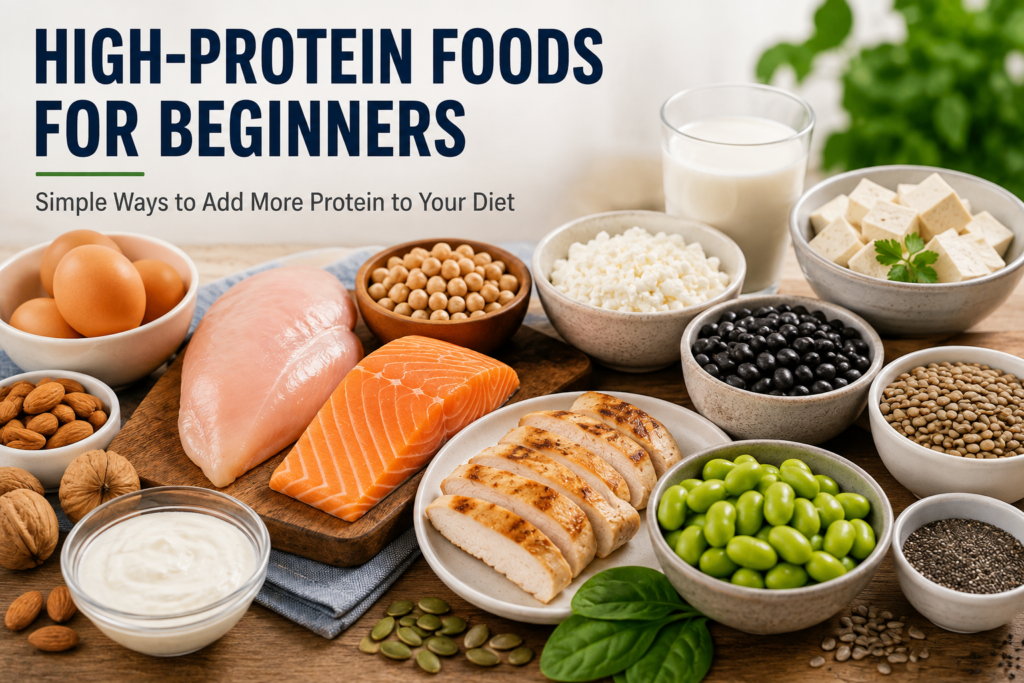
Protein is naturally found in many everyday foods, including meat, poultry, seafood, eggs, dairy foods, beans, lentils, peas, soy foods, nuts, and seeds.
For most beginners, a practical starting point is not to chase the highest possible protein number. It is to understand where protein comes from and learn how to include suitable protein foods within an overall balanced eating pattern.
Important: Protein and overall nutrition needs vary between individuals. Your needs may differ based on factors such as age, body size, activity level, health circumstances, pregnancy, and other considerations. If you have a medical condition, dietary restriction, or need an individualized nutrition plan, seek advice from an appropriately qualified healthcare professional.
What Is Protein?
Protein is one of the major nutrients your body needs.
Proteins are made from smaller components called amino acids.
Your body uses protein in many processes, including building and maintaining tissues. Protein is present throughout the body and is important for normal growth, maintenance, and repair.
Some amino acids can be made by the body, while essential amino acids need to come from the diet.
Fortunately, protein is available from many different foods.
You do not need to rely on one particular food or supplement to obtain it.
You Probably Already Eat Some Protein
When people hear “high-protein foods,” they may immediately imagine chicken breasts, steaks, or protein shakes.
Those can contain protein, but they are only part of the picture.
Common protein-containing foods include:
- eggs,
- poultry,
- fish and seafood,
- meat,
- milk,
- yogurt and other dairy foods,
- beans,
- lentils,
- peas,
- tofu and other soy foods,
- nuts, and
- seeds.
Some grains and other foods also contribute protein.
Your total intake comes from the combination of foods you eat throughout the day.
How Much Protein Do You Need?
There is no single protein target that is appropriate for every reader.
Protein needs can vary based on your overall diet, age, body size, physical activity and individual circumstances.
Current U.S. dietary guidance places greater emphasis on prioritizing nutrient-dense protein foods and including a variety of protein sources.
However, that does not mean everyone should calculate a protein target from a generic online formula and treat it as an individualized prescription.
People with specific health conditions, specialized athletic goals or other nutritional concerns may benefit from individualized professional guidance.
For a beginner, it is often more useful to first examine the quality and variety of protein foods in your diet rather than becoming obsessed with a particular number.
Include a Variety of Protein Foods
You do not need to eat the same protein food at every meal.
Variety can make your diet more enjoyable while providing different combinations of nutrients.
Current U.S. dietary guidance includes protein foods from both animal and plant sources.
Animal-source options can include:
- eggs,
- poultry,
- seafood,
- meat, and
- dairy foods.
Plant-source options can include:
- beans,
- peas,
- lentils,
- soy foods,
- nuts, and
- seeds.
You can build your eating pattern according to your preferences, culture, budget and nutritional needs.
Eggs Are a Convenient Protein Food
Eggs are widely available, relatively simple to prepare and can fit into many different meals.
They can be used at breakfast, added to a meal, included in sandwiches or salads, or combined with vegetables and other foods.
The advantage for beginners is convenience.
You do not need a complicated recipe to include eggs in a meal.
However, eggs do not need to become your only protein source.
Think about them as one option within a varied eating pattern.
Poultry and Meat Can Provide Protein
Chicken, turkey, beef, pork and other meats can provide substantial amounts of protein.
How these foods fit into your diet depends on the type, preparation method, portion and your overall dietary pattern.
Highly processed versions can differ considerably from minimally processed foods in sodium, added ingredients and other characteristics.
Cooking methods also matter.
Instead of assuming that a food is automatically healthy simply because it contains protein, consider the entire food and how it is prepared.
Protein content is only one part of nutritional quality.
Fish and Seafood Provide More Than Protein
Fish and seafood can provide protein along with other nutrients.
Different seafood varieties have different nutritional characteristics, so variety can be useful.
Some fish also provide omega-3 fatty acids.
Certain people, particularly those who are pregnant, may need to pay closer attention to official advice about seafood choices and mercury exposure.
Protein does not need to come from seafood every day.
It is simply another category that can contribute to a varied eating pattern.
Dairy Foods Can Contribute Protein
Dairy foods such as milk, yogurt and cheese can also contribute protein.
Some dairy foods can be particularly convenient because they require little or no preparation.
For example, yogurt can be combined with fruit or other foods as part of a meal or snack.
People who do not consume dairy because of allergies, intolerance, dietary preferences or other reasons may use appropriate alternatives depending on their nutritional needs.
Keep in mind that products marketed as dairy alternatives can vary substantially in protein and other nutrients.
Check the nutrition label rather than assuming all alternatives are nutritionally identical.
Beans and Lentils Are Useful Plant Protein Foods
Protein does not have to come from animal foods.
Beans, peas and lentils are important plant-source protein foods and also provide other nutrients, including fiber.
Examples include:
- black beans,
- kidney beans,
- chickpeas,
- lentils,
- split peas,
- pinto beans, and
- other legumes.
They can be used in soups, stews, salads, curries, bowls and many other meals.
Canned versions can also be convenient. Depending on the product, you may want to compare labels for sodium and other ingredients.
Beans and lentils can be particularly useful when you want an inexpensive protein source that can be stored easily.
Soy Foods Are Another Plant-Based Option
Soy foods can contribute meaningful amounts of protein.
Examples include:
- tofu,
- tempeh,
- edamame, and
- suitable soy-based foods.
These can be incorporated into stir-fries, bowls, soups and other meals.
You do not have to follow a vegetarian diet to eat plant-source proteins.
Someone can include both animal- and plant-source protein foods if that suits their preferences.
Likewise, people who avoid animal products can obtain dietary protein from appropriate combinations of plant foods.
Nuts and Seeds Contribute Protein Too
Nuts and seeds can contribute protein along with dietary fats and other nutrients.
Examples include:
- almonds,
- peanuts,
- walnuts,
- pistachios,
- sunflower seeds,
- pumpkin seeds,
- chia seeds, and
- other nuts and seeds.
Nut and seed butters can also be convenient.
However, foods do not need to be eaten in unlimited amounts simply because they provide protein.
Portion size still contributes to your overall energy intake.
Think of nuts and seeds as one useful component of an overall eating pattern rather than a food you need to consume excessively.
Start With Foods, Not Supplements
When someone decides to eat more protein, protein powder is often one of the first products they consider buying.
But a supplement does not automatically need to be your starting point.
Many people can obtain protein from ordinary foods.
Before buying a protein supplement, look at what you already eat.
Ask:
Do my regular meals contain protein foods?
Could I add an ordinary protein-rich food to a meal that currently lacks one?
Am I buying a supplement because I actually need it, or because marketing convinced me that everyone should use one?
A supplement should not automatically replace a varied diet.
Protein Powder Is a Convenience Product, Not a Requirement
Protein powders can be convenient in some circumstances.
That does not make them essential for everyone who exercises.
Someone who already obtains sufficient protein through food may not need a powder simply because they started working out.
Supplements can also vary in ingredients, nutritional content and quality.
If you have a medical condition, take medication, have allergies or have other health concerns, individualized professional advice may be appropriate before using dietary supplements.
Do not assume that a product is safe, necessary or effective simply because it is marketed to fitness enthusiasts.
Add Protein to Breakfast Without Completely Changing Breakfast
Breakfast is one meal where some people may find it easy to add a protein food.
Depending on your preferences, possibilities might include:
- eggs,
- yogurt,
- milk,
- suitable soy foods,
- nuts or seeds,
- nut butter, or
- other protein-containing foods.
You do not have to create a complicated “fitness breakfast.”
Look at what you already eat and consider whether an appropriate protein food could naturally fit.
For example, fruit might be paired with yogurt, or another familiar breakfast might include eggs.
The exact choice depends on your dietary needs and preferences.
Add Protein to Lunch and Dinner
The same principle works for other meals.
Instead of designing an entirely new diet, identify the protein component of the meal.
Depending on your dietary pattern, that might be:
- fish,
- poultry,
- meat,
- eggs,
- beans,
- lentils,
- tofu,
- tempeh, or
- another suitable protein food.
Then consider what else completes the meal.
Protein should not push vegetables, fruits, whole grains and other useful foods out of your diet.
A healthy eating pattern is broader than one nutrient.
For more help with the overall structure of meals, read our guide to how to build a balanced meal.
Snacks Can Contain Protein, but They Don’t Have To Be “Protein Snacks”
The food industry sells many products specifically as high-protein snacks.
Some may be useful, but the words “high protein” on a package do not automatically make a product the best choice for you.
Ordinary foods can also contribute protein.
Depending on your needs and preferences, examples might include yogurt, nuts, seeds, an egg or other appropriate foods.
Always consider the entire nutritional profile rather than evaluating a packaged food based on protein alone.
More Protein Is Not Automatically Better
Once people start paying attention to protein, it can become tempting to maximize it.
But nutrition is not a competition to consume the largest possible amount of one nutrient.
Your diet also needs other nutrients and food groups.
Eating more protein than you personally need does not automatically produce more muscle or better health.
Protein intake should exist within an overall eating pattern that fits your energy and nutritional needs.
Avoid treating a very high protein number as a goal simply because someone online promotes it.
Strength Training and Protein Work in a Larger Context
Protein is often discussed alongside resistance training because dietary protein supplies amino acids used by the body, including for muscle tissue.
But eating protein alone does not replace exercise.
Likewise, strength training does not mean your entire diet needs to become protein products.
Think about the bigger picture:
Appropriate training + adequate nutrition + recovery + consistency
If you are new to resistance exercise, see our beginner strength training at home guide.
Protein Can Fit Into Weight Management Without Becoming a “Protein Diet”
If weight loss is appropriate for you, you may also encounter diets that market protein as the entire solution.
Protein foods can certainly be part of a weight-management eating pattern.
But body-weight management still involves your overall food and beverage intake, activity, sleep, habits, individual circumstances and energy balance.
Adding protein does not make calories or overall dietary quality irrelevant.
For a broader explanation, read how to create a calorie deficit without starving yourself.
You Can Get Protein Without Eating Meat
Someone does not have to eat meat to obtain dietary protein.
Plant-source foods such as beans, lentils, soy foods, nuts and seeds can contribute protein.
People who follow vegetarian or vegan eating patterns should still pay attention to the overall adequacy and variety of their diet.
Certain nutrients may require particular attention depending on which foods are excluded.
If you follow a restrictive dietary pattern or are unsure whether your diet meets your nutritional needs, individualized guidance from an appropriately qualified nutrition professional can be useful.
Don’t Judge a Food by Protein Alone
A package that says “20 grams of protein” may look impressive.
But protein content is only one piece of information.
Depending on the food, you may also want to consider:
- portion size,
- calories,
- added sugars,
- sodium,
- saturated fat,
- fiber,
- other nutrients, and
- how the food fits into your overall eating pattern.
Food marketing often emphasizes whichever nutrient makes a product sound most appealing.
Read beyond the front of the package.
Keep Convenience in Mind
A nutrition plan that requires complicated cooking at every meal may be difficult to maintain.
Convenient protein foods can make consistency easier.
Depending on your dietary pattern, useful options might include foods such as:
- canned beans,
- lentils,
- eggs,
- yogurt,
- canned or packaged fish where appropriate,
- tofu,
- frozen edamame,
- nuts and seeds, or
- previously prepared protein foods stored appropriately.
The best option is not necessarily the trendiest one.
It is an option that fits your nutritional needs, budget, food preferences and daily routine.
A Simple Beginner Approach
You do not need to redesign your diet overnight.
Start by looking at your regular meals.
Ask:
Breakfast: Is there a suitable protein food here?
Lunch: What is the main protein source?
Dinner: Am I including a protein food along with other nutrient-dense foods?
Snacks: Do I actually need another protein product, or am I already meeting my needs through meals?
Then make adjustments gradually.
This approach is much easier to sustain than suddenly filling your kitchen with expensive protein products.
When Individual Protein Advice Matters
General online information cannot determine exactly how much protein every reader should eat.
Individualized advice may be particularly useful if you:
- have kidney disease or another medical condition affected by diet,
- are pregnant or breastfeeding,
- are an older adult with specific nutritional concerns,
- follow a highly restrictive diet,
- have food allergies or significant intolerances,
- are training for specialized athletic or performance goals,
- are recovering from an illness or injury,
- have concerns about inadequate nutrition, or
- have been advised to follow a medically specific diet.
An appropriately qualified healthcare or nutrition professional can consider factors that a general article cannot.
The Bottom Line
Adding protein to your diet does not require living on chicken breasts and protein shakes.
Protein is available from many everyday foods, including eggs, poultry, seafood, meat, dairy foods, beans, lentils, peas, soy foods, nuts and seeds.
Aim for variety rather than relying on one source.
Look at your existing meals and identify simple opportunities to include suitable protein foods while maintaining an overall balanced eating pattern.
Protein supplements may be convenient in some circumstances, but they are not automatically necessary.
Most importantly, do not turn protein into another nutrition obsession.
The goal is not to consume the highest possible amount.
The goal is to build an eating pattern that appropriately supports your individual nutritional needs and is realistic enough to maintain.
Sources
U.S. Department of Health and Human Services and U.S. Department of Agriculture. Dietary Guidelines for Americans, 2025–2030.
U.S. National Library of Medicine, MedlinePlus. Protein in diet.
U.S. National Library of Medicine, MedlinePlus. Dietary Proteins.
Consider your individual circumstances and consult an appropriate qualified healthcare professional when needed.